BUILT ON BLUEGRASS STONE
Bluegrass Stone & Masonry provides professional tuckpointing in Lexington, KY for homeowners dealing with cracked, crumbling, or missing mortar joints. Over time, moisture, age, and Kentucky’s freeze-thaw cycles can weaken mortar and allow water to penetrate brick and stone walls.
Homeowners looking for a reliable tuckpointing contractor or professional mortar repair in Lexington, KY can count on Bluegrass Stone & Masonry for careful preparation and a clean, natural finish.
Historic District Specialists · Fully Insured · Detailed Masonry Assessments
ARCHITECTURAL DIRECT ANSWER • LEXINGTON REGION
Restoring Our Historic Assets
Tuckpointing and repointing from Bluegrass Stone & Masonry restores deteriorated mortar joints on historic and modern brick and stone buildings throughout Lexington, downtown Gratz Park, La Grange's historic Main Street, and the surrounding region.
ARCHITECTURAL HERITAGE & DEFINITION
The Art of Preservation
Originating in eighteenth-century England and perfected across Kentucky's grandest historic estates, precision mortar craft has long served as the invisible backbone of timeless architecture. Over centuries of seasonal expansion, water intrusion, and natural weathering, the binder between hand-hewn limestone and historic brick inevitably degrades, demanding discerning, period-accurate intervention.
Repointing is a purely restorative, structural discipline: the meticulous excavation of failed, spalling mortar to a uniform depth, followed by the careful packing of high-calcium, lime-based mortar formulated to match the original masonry's compressive strength and vapor permeability without stressing fragile vintage brickwork.
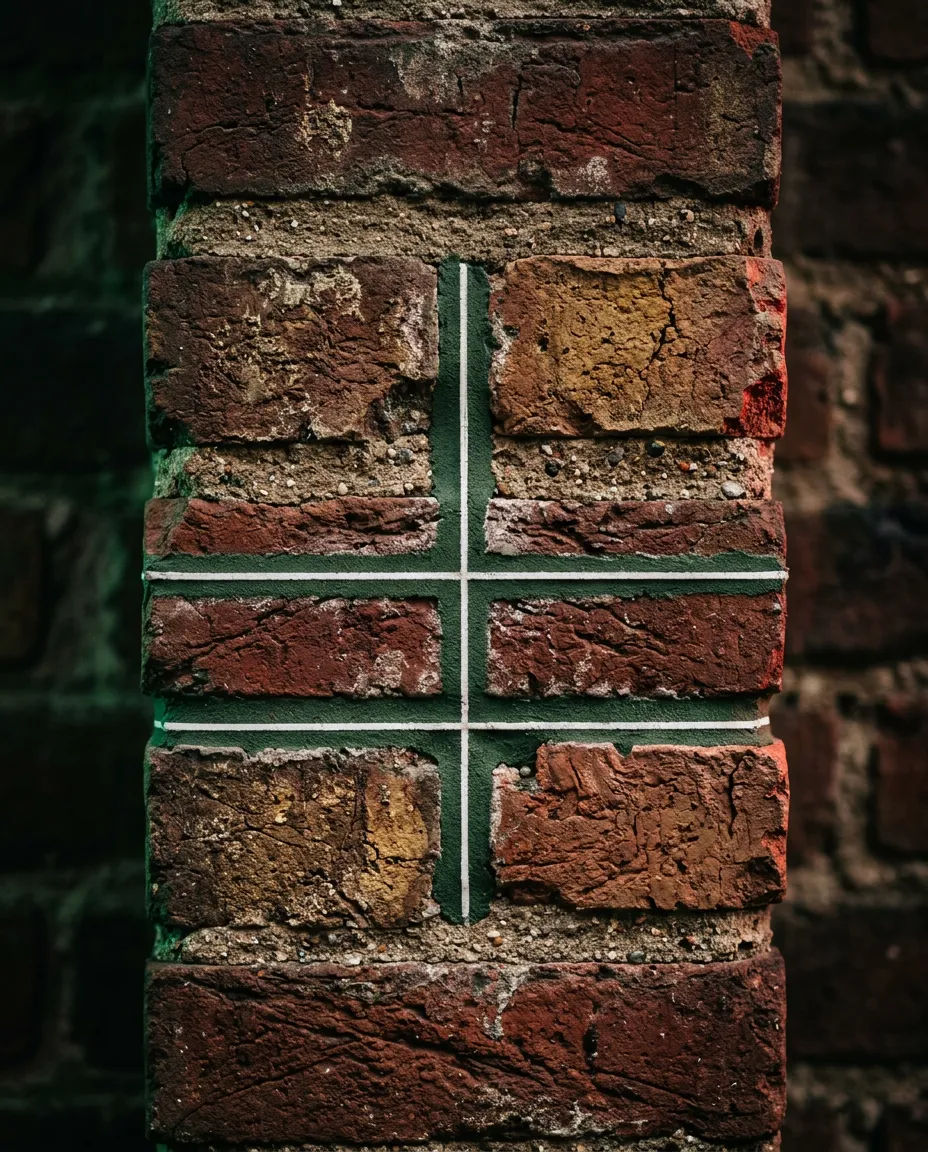
Tuckpointing builds upon this structural foundation as an elevated aesthetic artform. After base mortar color-matched to the brick is laid flush, an ultra-fine, razor-straight groove is channeled and filled with a contrasting lime putty ribbon, creating the crisp optical illusion of perfectly gauged, aristocratic ashlar joints.
CRITICAL FIELD DIAGNOSTICS
Professional Tuckpointing Services
Removal of deteriorated mortar
New mortar joint installation
Brick repointing
Chimney mortar repair
Exterior wall restoration
Historic masonry joint repair
Stone mortar restoration
Color and joint-profile matching
Our repointing Lexington KY services focus on removing damaged mortar carefully and replacing it with a compatible material. Matching the new mortar to the existing masonry is important for both appearance and long-term performance.
URGENCY ADVISORY: Moisture migration through pulverized lime beds accelerates mortar loss by up to 300% during winter months.
FAILURE SPEC 01 // CRACKING
Stepped & Vertical Bed Joint Fractures
Diagonal stair-step cracks tracking through head and bed joints signal uneven structural settlement or lateral earth pressure against foundation walls. When cracks split individual stones, internal masonry tie-ins are compromised.
FAILURE SPEC 02 // FRIABILITY
Powdering & Eroded Lime Mortar Beds
Mortar that crumbles under moderate finger pressure has reached chemical matrix breakdown. As binder leaches out, gaps form behind the outer ribbon, allowing water to pool deep within the inner wythe.
FAILURE SPEC 03 // DELAMINATION
Spalling & Limestone Face Cleavage
Flaking, spalling, and shear fractures on stone faces frequently occur when modern Portland cement is inappropriately applied over historic lime joints. Hard mortar traps moisture, forcing natural stone to burst under sub-surface freeze cycles.
FAILURE SPEC 04 // DISPLACEMENT
Bulging, Out-of-Plumb Courses & Bowing
Visible outward deflection across stone courses indicates severe internal wall delamination. The outer stone facade has separated from its backing wythe, risking sudden localized collapse if left unrestrained.
HERITAGE SPECIFICATION SCHEDULE
Comprehensive Restoration Scope
Precision masonry remediation engineered specifically for historic Kentucky limestone, structural brickwork, and period estate facades.
SPEC 04-010 : REPOINTING
Full & Partial Repointing
Systematic hand and low-vibration pneumatic mortar rake-out to a minimum 2.5x joint depth, preventing micro-fractures in legacy masonry.
- Non-impact rake-out to sound substrate
- Localized bed joint stabilization
- Zero-arising edge preservation
SPEC 04-020 : FORMULATION
Historic Mortar Matching
Laboratory-grade aggregate sieve analysis and custom non-hydraulic lime compounding for vapor-permeability and compressive parity.
- High-calcium non-hydraulic lime binders
- Regional sand hue and gradation matching
- Targeted low-PSI compressive strength
SPEC 04-030 : TOOLING PROFILE
Joint Profile Matching
Faithful replication of traditional 19th-century Kentucky joint geometries, maintaining historic shadowlines and architectural intent.
- Traditional Kentucky beaded joint tooling
- Weather-struck and concave profiles
- Flush-cut historic stone ribbon joints
HISTORIC RESTORATION METHODOLOGY
Our Masterful Process
Every restoration follows a disciplined, six-stage architectural standard designed to safeguard masonry longevity, prevent water ingress, and honor Kentucky's heritage craft.
Diagnostic Masonry Inspection
Comprehensive structural assessment of stone joints, moisture pathways, foundation settlement, and prior mortar failures.
Historic Lime Mix & Color Matching
Laboratory aggregate matching to replicate the original breathability, compressive strength, and natural patina of Kentucky limestone.
Architectural Scope & Estimate
Transparent, line-by-line historic restoration blueprint detailing square footage, joint depths, materials, and fixed timelines.
Non-Destructive Mortar Removal
Precision pneumatic and hand-raking to safely extract decayed binder to required 3/4-inch depth without abrading stone arris edges.
Layered Repointing & Tooling
Successive lift packing with historic lime mortars, strike-finished to match original historic profiles and shed rainwater effectively.
Non-Acidic Wash & Site Cleanse
Gentle neutral masonry cleanse to remove residual binder haze, followed by a thorough site audit and final walkthrough verification.
Complimentary on-site evaluation for historic properties across Central Kentucky.
HISTORIC MORTAR ANALYSIS & MATCHING
Uncompromising Materials
PROJECT SCOPE & COST DRIVERS
Understanding Your Investment
Historic masonry restoration is priced on verifiable architectural realities, not arbitrary estimates. Every property requires custom tooling, material compatibility, and specialized site setup.
SPECIFICATION NOTE: All estimates include comprehensive joint rake-out to sound substrate, exact mortar analysis, and non-acidic final stone cleansing.
1. Surface Area & Joint Depth
Overall square footage determines raw labor hours, while joint deterioration depth dictates whether hand raking or precision diamond blade extraction is mandated to protect historic edges.
2. Historic Mortar & Aggregate Formulation
Custom high-calcium lime putty compounding with region-specific sand aggregates ensures breathability. Matching 19th-century compressive strength prevents spalling and fracture damage.
3. Height, Scaffolding & Site Access
Multi-story chimney stacks, parapets, and tight lot lines require specialized pipe scaffolding, pedestrian protection, and historic landscape preservation measures during execution.
4. Moisture Penetration & Substrate Repair
Underlying efflorescence, corroded structural wall ties, or internal freeze-thaw voiding are stabilized before exterior tuckpointing commences, ensuring complete moisture barrier integrity.
ARCHITECTURAL DEFINITIONS & HERITAGE
The Art of Preservation
While often used interchangeably by property owners, repointing and tuckpointing represent distinctly different tiers of masonry discipline. Repointing is the foundational, structural process of routing out deteriorated, decayed mortar joints and packing them with fresh, historically compatible lime-sand mortar. It restores physical integrity, preventing structural collapse and interior water infiltration.
True tuckpointing, by contrast, is a refined 18th-century English finishing technique developed to give irregular handmade brick the sharp appearance of finely gauged masonry. After color-matched base mortar is flushed to the brick face, a delicate groove is routed along the joint center and filled with a contrasting, razor-thin fillet of lime putty. The result is flawless visual precision paired with lasting structural resilience.
In Central Kentucky, seasonal moisture combined with rapid winter freeze-thaw cycles subjects compromised joints to relentless hydraulic pressure. When micro-fractured mortar allows moisture behind the facade, freezing water expands by 9%, spalling historic brick faces beyond repair. Timely intervention using precise, breathable mortar formulations halts this degradation, securing the estate for another century.
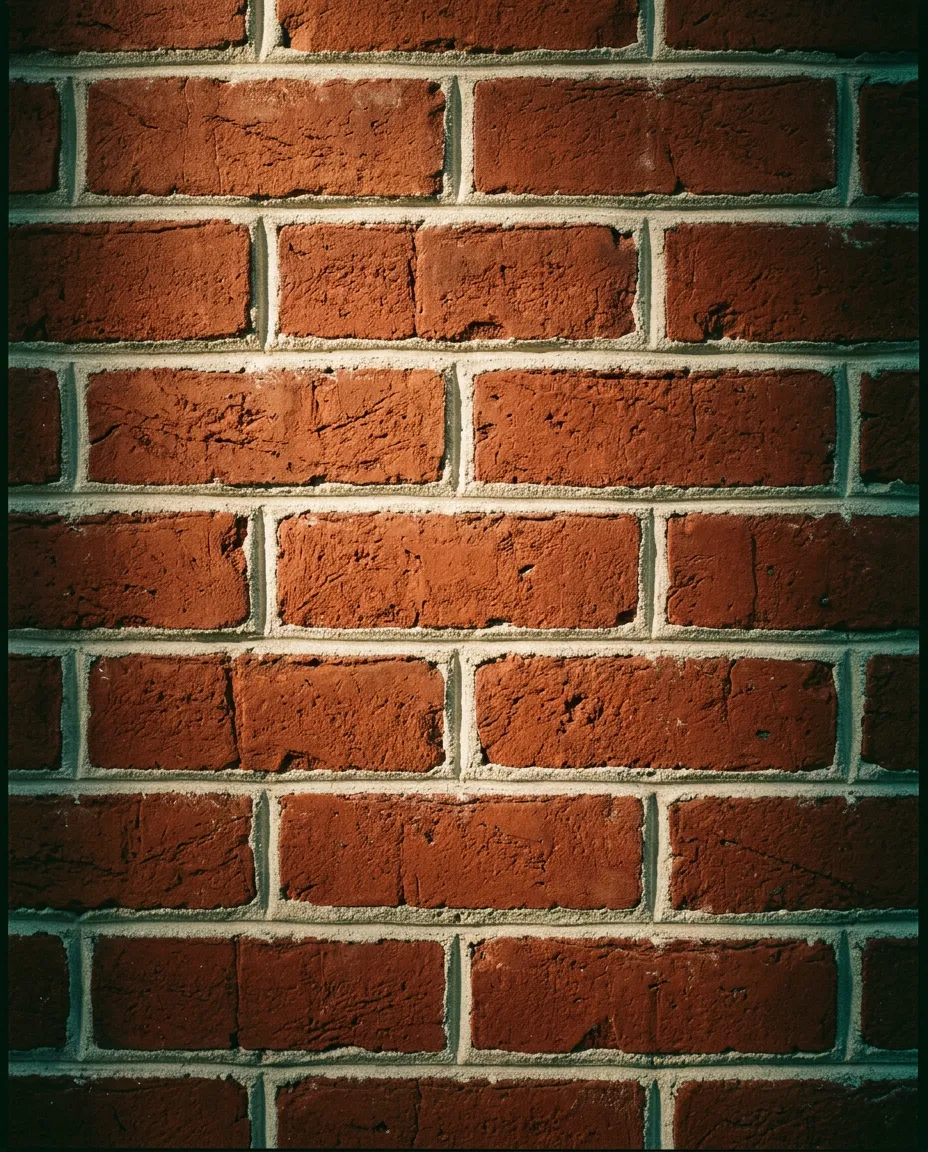
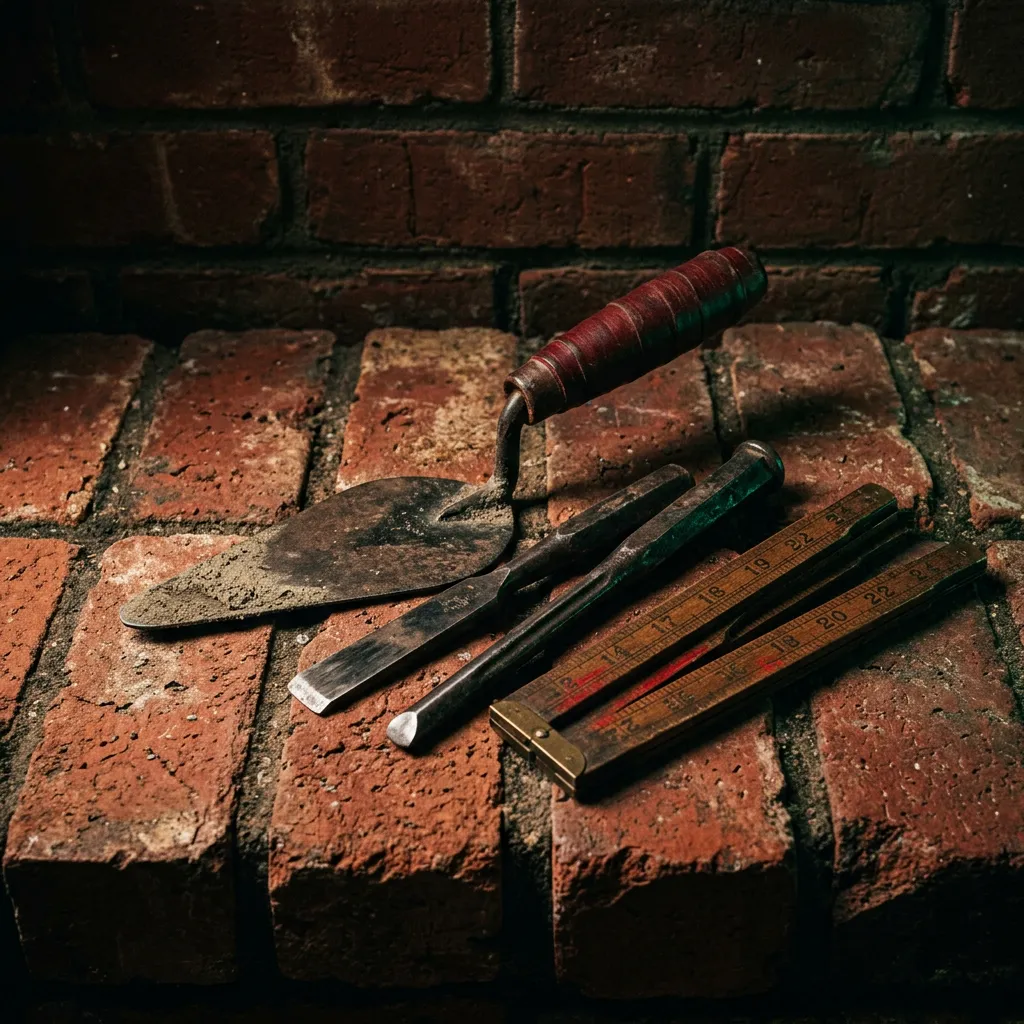
Plate No. 04 : Architectural profile of historical lime-putty tuckpointing executed on 19th-century pressed red clay brick.
MASONRY DIAGNOSTIC CRITERIA
Tuckpointing vs. Repair
Identify whether your structure requires surface-level joint renewal or deep structural unit intervention before moisture damages the underlying masonry core.
CASE A: MORTAR SURFACE EROSION
Precision Tuckpointing
“Mortar erodes naturally over 25–40 years to protect the historic brick from thermal stress.”
- Mortar joints show powdery decay, hollow gaps, or washouts beyond 1/4 inch depth
- Surrounding brick units remain structurally sound with sharp corners and intact faces
- No diagonal settlement fractures or wall deflection across masonry courses
- Objective: Precision rake-out and breathable lime-matched mortar re-application
CASE B: BRICK FAILURE & DISPLACEMENT
Comprehensive Brick Repair
“When brick faces spall or crack through the core, surface repointing alone cannot restore structural integrity.”
- Brick faces flaking (spalling), crumbling, or fractured through the clay body
- Stair-step diagonal settlement cracks traversing multiple brick and joint courses
- Bulging, bowing, or separated masonry wythes indicating moisture or anchor failure
- Objective: Surgical unit replacement, lintel reinforcement, and structural tying
ARCHITECTURAL CONSERVATION
The Art of Preservation
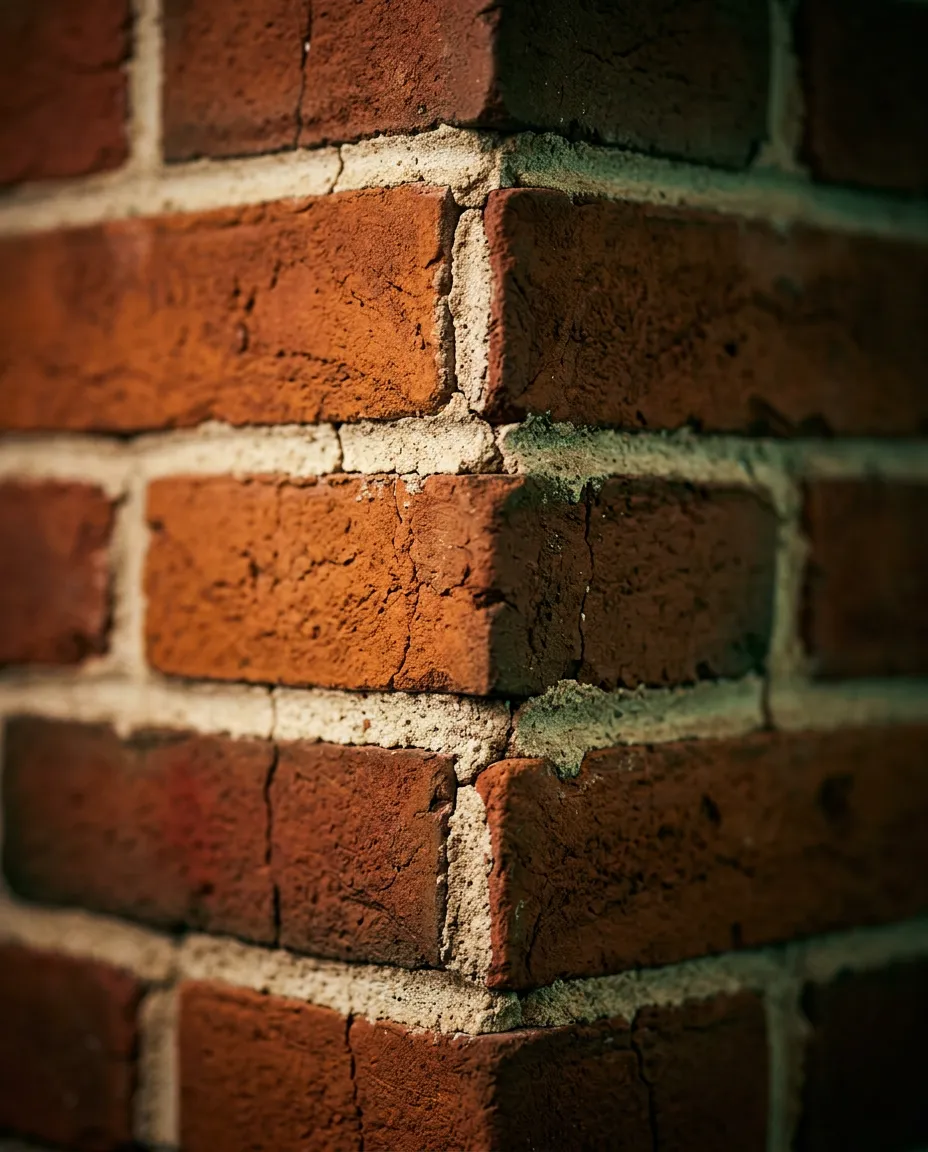
Historic masonry restoration requires a fundamental understanding of two distinct craft disciplines: tuckpointing and repointing. While frequently used interchangeably in modern conversation, their historical intent and execution represent entirely different standards of masonry care.
Repointing is the structural practice of carefully cutting out damaged, decayed, or eroded mortar joints to a uniform depth and packing them with freshly formulated, lime-compatible mortar to restore weatherproofing and structural cohesion.
Tuckpointing, by contrast, originated in late-eighteenth-century England as a refined aesthetic technique. After establishing a mortar base that closely matches the brick, a contrasting, ultra-fine fillet of white lime putty is pressed into a precise groove down the centre, creating the visual illusion of razor-thin, pristine joints across irregular historic masonry.
TECHNICAL & LOGISTICAL SPECIFICATIONS
Expert Answers
Preserving historic Bluegrass masonry requires uncompromising technical discipline. Below are detailed answers regarding our traditional lime mortar formulations, joint preparation thresholds, and architectural compliance standards.
Direct master mason consultation : No obligation
Why is traditional lime mortar mandatory for historic Kentucky limestone?
Historic Kentucky limestone is soft and porous. Modern Portland cement dries too hard and impermeable, trapping moisture inside stone blocks and causing catastrophic surface spalling during freeze-thaw cycles. Natural hydraulic lime (NHL) mortar allows the wall to breathe and flex safely with seasonal ground shifts.
How does Kentucky’s freeze-thaw climate accelerate masonry degradation?
Lexington experiences frequent winter temperature swings across the 32°F threshold. When hairline joint cracks admit moisture, trapped water expands by roughly 9% upon freezing, exerting immense hydraulic pressure that fractures weakened mortar and adjacent stone faces.
What is the correct depth specification for raking decayed mortar joints?
Mortar must be raked back to a minimum depth equal to twice the width of the joint, or at least 3/4 inch until sound, unweathered bed mortar is exposed. This ensures adequate mechanical bonding surface for the new hydraulic lime compound.
How do you achieve exact aggregate and color matching on aged stonework?
We take core samples from sheltered sections of your wall, perform acid digestion to separate the original sand aggregates, and formulate custom batches utilizing local Kentucky river sands, crushed limestone, and mineral pigments to replicate historic tooling and weathered patina.
Can comprehensive tuckpointing halt active interior moisture and efflorescence?
Yes. Tuckpointing eliminates the primary entry channels for driven rainwater. When combined with correct capstone flashing and breathable lime repointing, hydrostatic pressure dissipates naturally through vapor transmission rather than pooling internally.
Are your restoration processes compliant with local Historic Preservation Commissions?
All our methods adhere strictly to the Secretary of the Interior’s Standards for the Treatment of Historic Properties. We regularly draft and submit architectural specification submittals for historic districts across Fayette, Bourbon, and Woodford counties.
What is the typical timeframe required for an estate tuckpointing project?
A standard residential facade or historic perimeter wall typically requires 1 to 3 weeks of on-site masonry work. Because lime mortar requires slow, controlled carbonation, damp burlap curing protocols are maintained throughout each stage.
What seasonal weather thresholds govern your masonry installation calendar?
Lime-based masonry work requires sustained ambient temperatures above 40°F (4°C) for both application and the initial 72-hour curing cycle. We schedule active field restorations from mid-March through late November to guarantee bond integrity.
What warranty protection accompanies your architectural repointing?
We provide a 10-year transferable structural craftsmanship warranty covering joint cohesion and water resistance on full-depth restorations executed to our architectural specifications.
How should restored dry-stacked and mortared stone be maintained going forward?
Never apply high-pressure washing (over 400 PSI) or non-breathable acrylic sealers. We recommend gentle bi-annual inspections, light low-pressure rinses for organic growth removal, and keeping climbing vegetation clipped away from stone faces.
LEXINGTON HISTORIC RESTORATION
Secure Your Building's Future
Protect your property before winter. Deteriorated mortar joints allow moisture intrusion that causes permanent masonry failure during freeze-thaw cycles.
Complimentary On-Site Assessment • Direct Mason Consultation • Fully Licensed in KY
Lexington, Kentucky
Monday–Friday: 7 AM–6 PM
Saturday & Sunday: Closed


Explore Bluegrass Stone & Masonry