BUILT ON BLUEGRASS STONE
While routine chimney sweeps clear creosote, we restore the load-bearing masonry that safeguards your home. From crumbling Kentucky limestone crowns to deep repointing and historic firebox rebuilding, our master stonemasons deliver structural permanence engineered for Central Kentucky weather.
Bluegrass Stone & Masonry provides professional chimney repair in Lexington, KY for homeowners dealing with cracked bricks, deteriorated mortar, loose masonry, damaged chimney crowns, and weather-related deterioration. Because chimneys are exposed to rain, snow, wind, and repeated freeze-thaw cycles, even small masonry problems can become more serious when moisture enters the structure.
Master Mason Oversight · Historic Lime & Modern Mortar · Detailed Diagnostic Reports
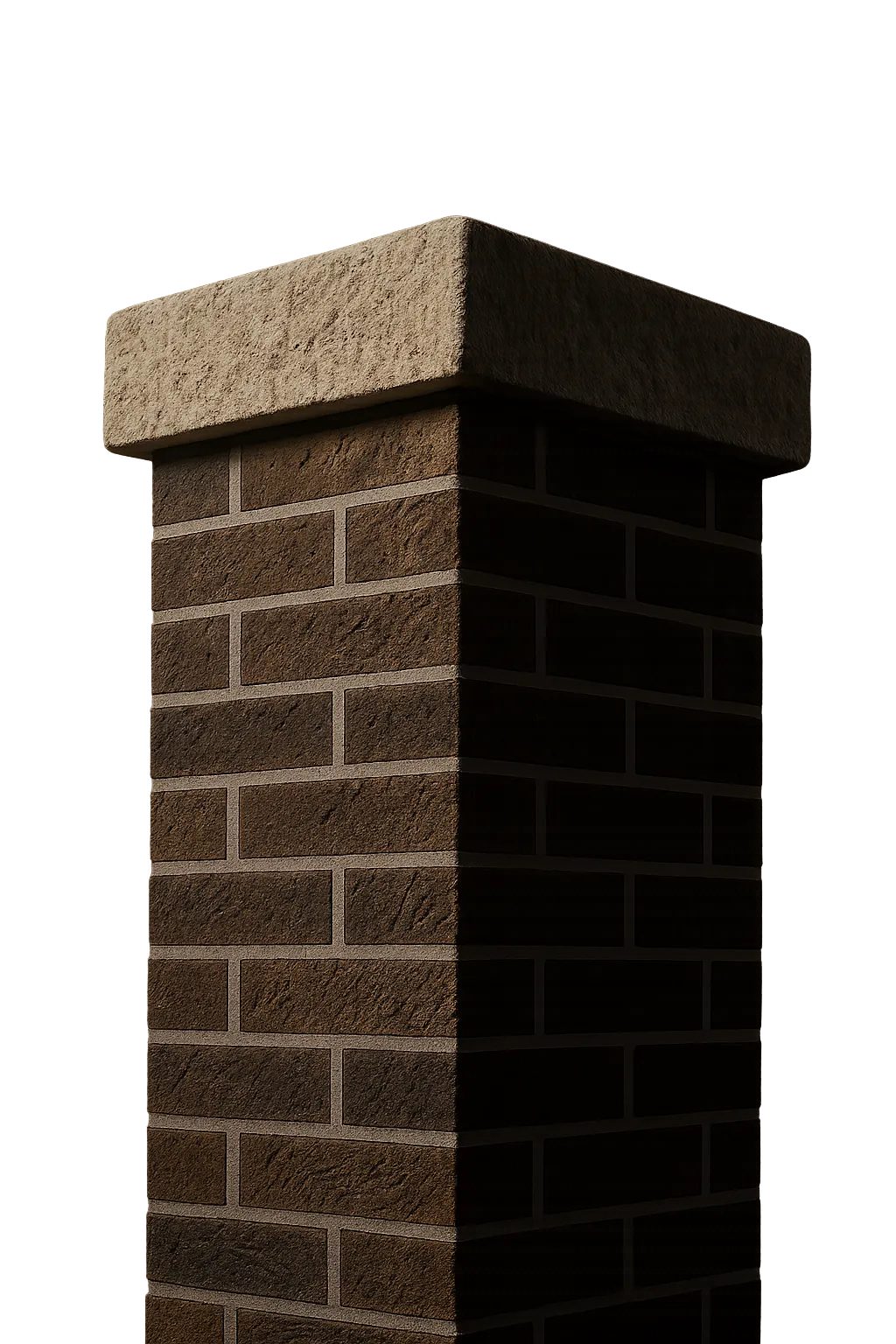
Professional Chimney Masonry Repairs
Cracked or spalling bricks
Loose or damaged masonry
Deteriorated mortar joints
Chimney crown damage
Missing or failing mortar
Water-damaged brickwork
Stone chimney deterioration
Partial masonry rebuilding
Chimney tuckpointing and repointing
Chimney Repair in Lexington, Nicholasville & Georgetown
We provide chimney repair in Lexington KY for homes with deteriorated brick, failing mortar, and damaged masonry.
For homeowners needing chimney repair Nicholasville KY, we repair aging chimney joints, damaged brickwork, and weather-exposed masonry throughout Jessamine County.
Our chimney repair Georgetown KY services help homeowners address brick damage, mortar deterioration, and chimney masonry problems before they become more extensive.
Chimney Repair in Versailles, Winchester & Richmond
Bluegrass Stone & Masonry also provides chimney repair Versailles KY, including chimney tuckpointing, brick replacement, and mortar restoration for homes throughout Woodford County.
For homeowners searching for chimney repair Winchester KY, we provide masonry repairs for cracked brick, deteriorated mortar joints, and damaged chimney structures.
Our chimney repair Richmond KY services include brick chimney repair, masonry joint restoration, and repair of stone or brick chimneys affected by moisture and changing temperatures
Chimney Repair in Frankfort, Shelbyville & La Grange
We provide professional chimney repair Frankfort KY for residential properties needing brick replacement, repointing, and exterior masonry restoration.
Homeowners looking for chimney repair Shelbyville KY can rely on our team for chimney mortar repair, loose brick repair, and deteriorated masonry restoration.
We also provide chimney repair La Grange KY and nearby Oldham County areas, helping homeowners maintain brick and stone chimneys with careful, long-lasting masonry work.
BLUEGRASS MASONRY SCIENCE
Understanding Structural
Vulnerability
The Bluegrass microclimate exerts relentless mechanical pressure on residential chimney masonry. Positioned directly along the Ohio Valley storm corridors, central Kentucky experiences severe humidity swings, sustained wind-driven precipitation, and pervasive acid rain. Above the roofline, exposed brickwork and porous historic limestone absorb gallons of atmospheric moisture each season, slowly leaching chemical binders from vintage lime-and-sand mortar beds.
Homeowners frequently conflate routine chimney sweeping with structural masonry repair. While sweeping manages interior soot and combustible creosote deposits inside the flue liner, it does not assess or remedy external substrate decay. Structural masonry restoration involves engineering the entire exterior envelope: repointing degraded joints, resetting fractured crowns, replacing delaminated brick faces, and stabilizing shifting structural cores that flue brushes never encounter.
Most damaging of all is Central Kentucky's violent freeze-thaw oscillation. During a typical Lexington winter, ambient temperatures cycle across the 32°F freezing threshold dozens of times per month. Liquid moisture trapped deep within permeable masonry expands by nine percent upon freezing, shattering brick clay from within and dislodging mortar bonds. Without proactive, region-specific masonry intervention, invisible micro-fissures inevitably escalate into major catastrophic structural failures.
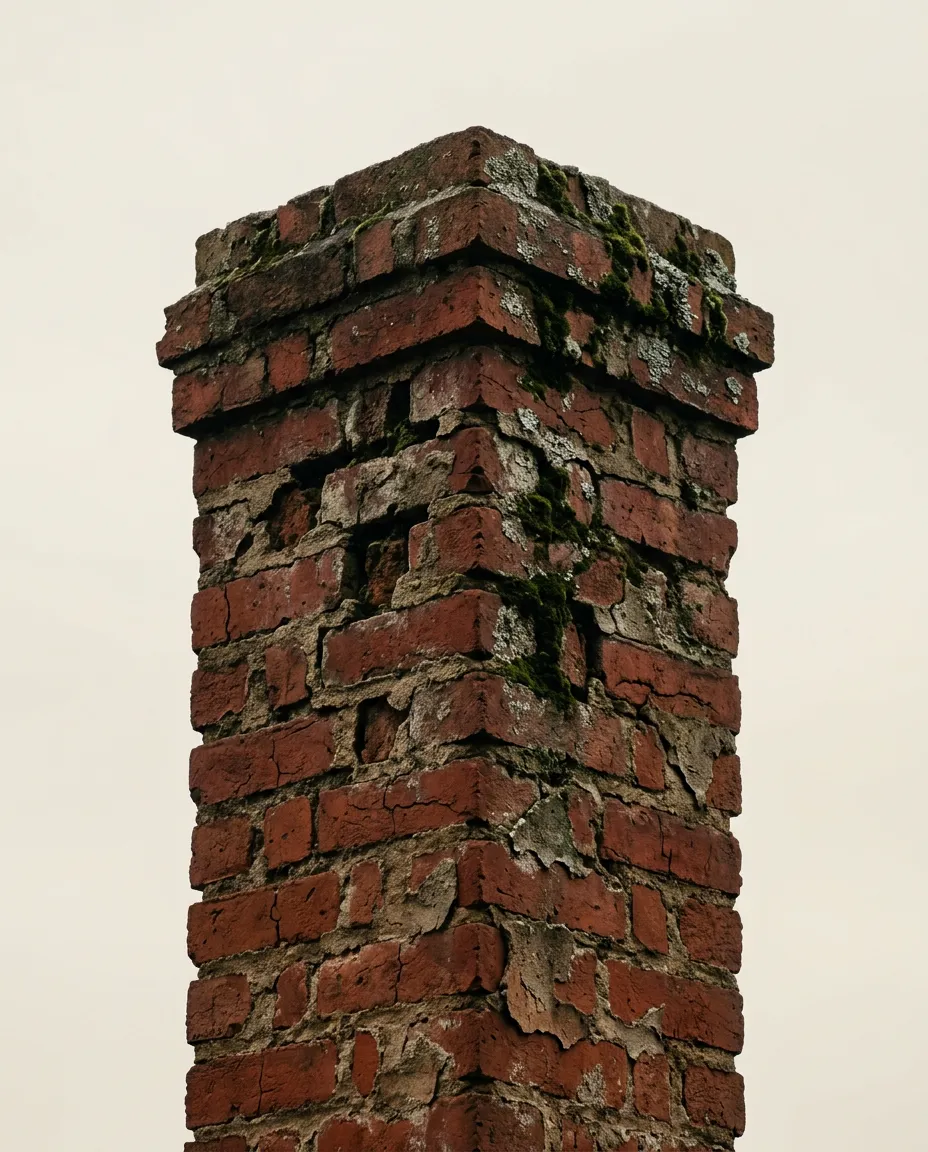
DIAGNOSTIC GUIDE • MASONRY SYMPTOMS
Six Signs Your Masonry
Is Failing
Kentucky's rapid freeze-thaw cycles exploit minor structural defects in brick and stone. Identify these critical symptoms early before surface degradation escalates into full chimney reconstruction.
1. Spalling & Peeling Brick Faces
When moisture penetrates brick pores and freezes, hydrostatic pressure causes the exterior masonry face to pop, flake, or crumble away entirely, leaving fragile porous cores exposed.
2. Fractured Masonry Crown
The concrete or mortar slab sealing the chimney top has developed hairline cracks or deep fissures, allowing rainwater to funnel directly between the chimney flue and exterior wall.
3. Mortar Joint Deterioration
Mortar joints between stone courses have eroded, receded, or turned powdery. Gaps over 1/8-inch deep compromise structural load-bearing capacity and demand professional tuckpointing.
4. White Efflorescence Staining
Chalky white powder on external brick indicates continuous moisture migrating through the masonry, dissolving natural mineral salts and depositing them on outer surfaces upon evaporation.
5. Stack Leaning or Tilting
A visible angle or separation from the roofline signals compromised internal footing, foundation settlement, or collapsed inner wythes, posing a severe structural collapse hazard.
6. Interior Firebox Dampness
Moisture stains around ceilings, rust on the damper, or a musty odor from the hearth indicate water has already traversed exterior stone barriers and is saturating attic and drywall framing.
Serving Lexington, Fayette County & Central Kentucky • On-Site Assessment & Itemized Masonry Plan
TECHNICAL SCOPE & STRUCTURAL CAPABILITIES
Comprehensive Structural
Restoration
Every masonry intervention adheres strictly to historic preservation standards and structural load engineering. Below is the comprehensive scope executed by our master stonecraft technicians across the Bluegrass region.
Field Standard Verification: All structural work includes ASTM C270 aggregate compliance, continuous core testing, and a comprehensive written warranty.
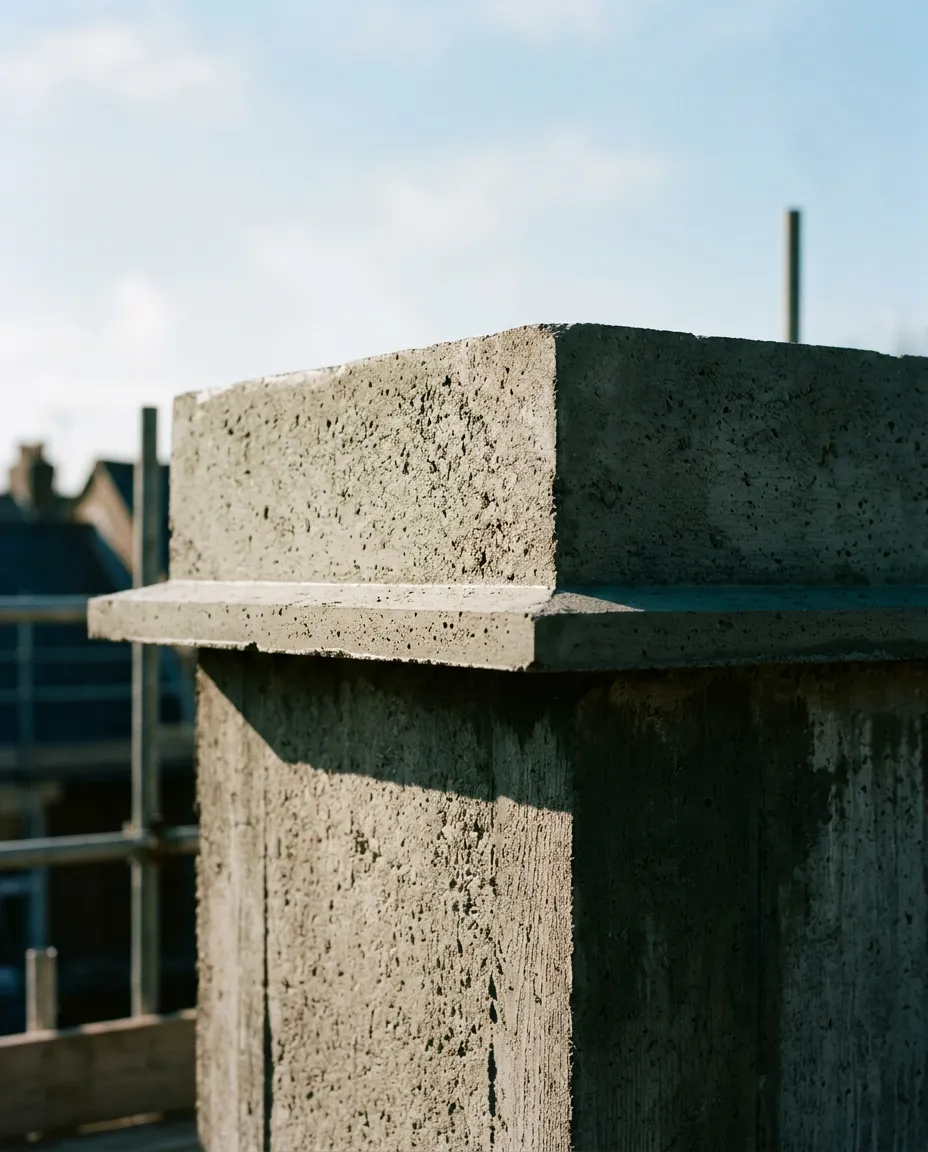
1. Reinforced Concrete Crown Reconstruction
Removal of cracked, thin mortar washes followed by cast-in-place Portland concrete crowns. Engineered with minimum 3-inch thickness, fiber reinforcement, outward shedding pitch gradients, and a 2-inch overhanging kerfed drip edge to prevent vertical face erosion.
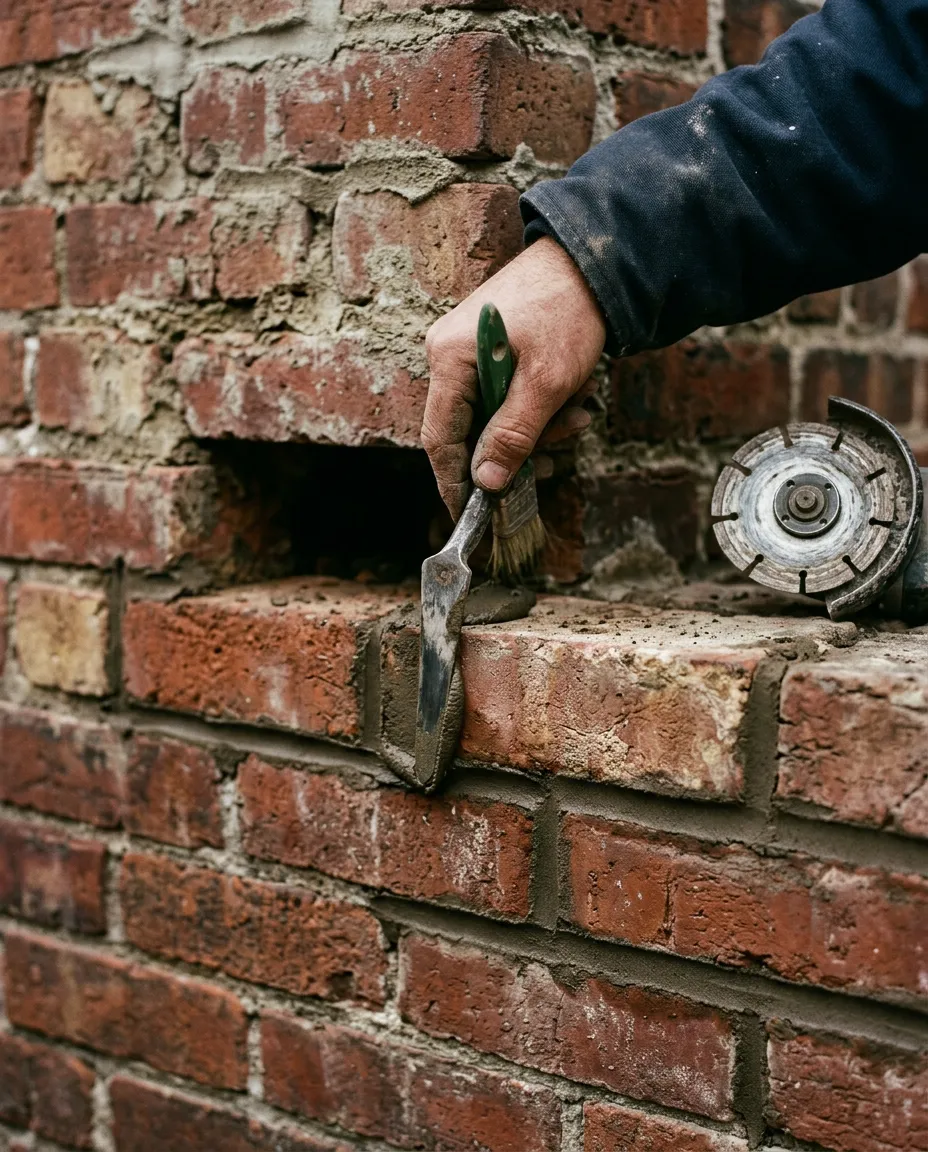
2. Deep Rake-Out & Precision Tuckpointing
Careful mechanical and hand-tool extraction of degraded joints to a minimum depth of 3/4 inch without abrading brick arris edges. Repointed in compacted lifts using concave strike tooling to shed driven rainwater and maintain original Bluegrass masonry profiles.
3. Historic Lime Mortar Formulation & Compressive Matching
Custom Type O and Type K high-calcium lime formulations specifically engineered for softer historic clay bricks and native limestone. Prevents spalling and thermal cracking by ensuring mortar remains sacrificial and vapor-permeable relative to the host masonry units.
4. Lead & Copper Flashing Integration with Reglet Anchors
Complete renewal of junction flashings utilizing 16 oz. cold-rolled copper or malleable lead counter-flashing. Embedded directly into newly cut 1-inch reglet mortar joints with lead wedges and polyurethane sealants to eliminate roofline water penetration permanently.
CONSERVATION STANDARDS & PROTOCOL
The Bluegrass Stone
Methodology
Chimney restoration across the Bluegrass region requires surgical discipline. Our six-stage methodology safeguards historic masonry structures, pairing authentic lime formulations with meticulous hand-tooling.
Comprehensive Site Protection & Structural Survey
We establish comprehensive protective decking over roofing profiles, seal internal damper and flue thresholds against micro-particulates, and conduct an acoustic mortar sound-test across the entire masonry stack.
Selective Spall Removal & Heritage Joint Raking
Decayed, carbonated mortar is cleared using calibrated non-impact hand chisels and slow-speed diamond rakes to a uniform depth of at least twice the joint height, protecting the fragile historic brick arris from edge fractures.
Cavity De-Dusting & Substrate Hydration Balance
Joint voids are thoroughly purged with dry compressed air and micro-flushed with low-pressure clean water to reach a surface-saturated dry (SSD) condition, ensuring dry heritage bricks cannot siphon moisture from new mortar beds.
Historic Hydraulic Lime & Aggregate Formulation
We formulate a custom naturally hydraulic lime (NHL) matrix balanced with regional Kentucky washed river sands, matching the aggregate sieve curve, breathability modulus, and chemical elasticity of original 19th-century binders.
Layered Compaction & Authentic Joint Profile Tooling
Mortar is packed in successive 6mm lifts using narrow striking irons, thoroughly compacted against interior voids to eliminate air pockets, and finished in the period-accurate concave profile to shed regional precipitation.
Controlled Hydration Curing & Historic Color Verification
The cured structure undergoes regulated damp-burlap hydration over 72 hours for proper carbonation, followed by a gentle organic residue rinse and a final spectrophotometer tint audit verifying seamless integration with surviving historic masonry.
BLUEGRASS HERITAGE MATERIALS
The Raw Beauty of
Local Stone
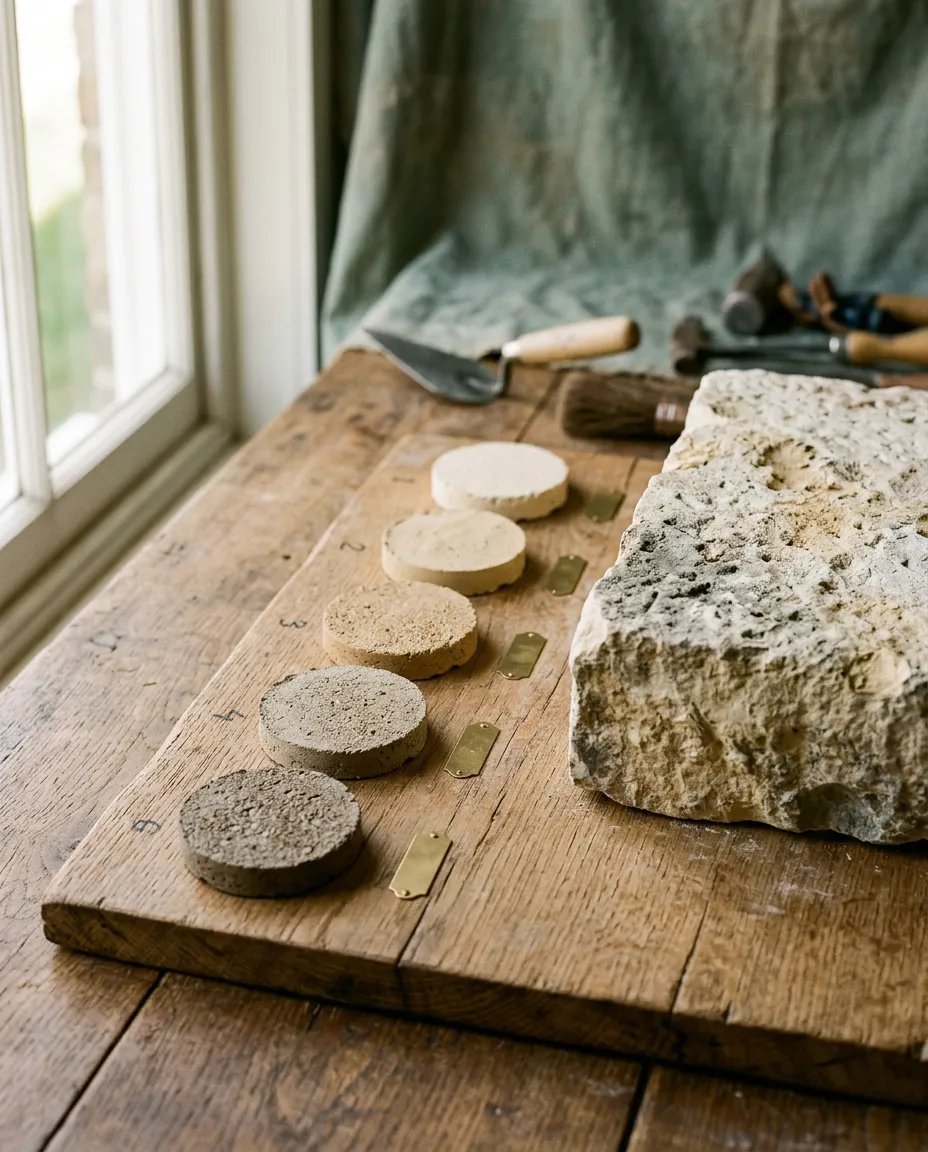
Hand-selected Kentucky limestone, quarried from native bedrock and bound with historic lime-mortar formulations designed to breathe, flex, and endure across generations.
TRANSPARENT VALUE & FISCAL REALITY
Investing in Structural
Integrity
Evaluating the economics of chimney restoration demands distinguishing between temporary cosmetic patches and authentic, code-compliant masonry preservation.
The Recurring Patch Cycle
Incompatible caulk sealants and surface troweling trap moisture internally, guaranteeing freeze-thaw spalling within 18 to 36 months.
True Structural Restoration
Deep-raked lime-blend repointing and breathable masonry defense eliminate internal water retention, safeguarding the chimney for decades.
The Real Cost of Incompatible Mortar
A standard handymen approach frequently uses rigid, high-strength Portland cement over historic Kentucky brick or soft limestone. While inexpensive initially, Portland cement cannot flex with seasonal temperature swings. Because it is harder than the surrounding stone, expansion forces transfer directly into the brick faces, shearing them off at the core and turning a minor tuckpointing maintenance issue into a catastrophic total-rebuild scenario.
Preserving Bluegrass Architectural Equity
In Central Kentucky, chimney architecture forms a core pillar of a home's curb valuation and insurance compliance. Water penetration behind unbonded masonry deteriorates attic framing, drywall ceilings, and internal flue liners long before exterior crumbling becomes visible. Investing in custom compressive-matched mortar, authentic stone jointing, and breathable vapor-permeable sealants stops hidden rot and protects your property equity permanently.
Direct masonry engineer reviews · Comprehensive itemized estimates
CENTRAL KENTUCKY GEOGRAPHY & PRESERVATION
Engineered for the
Bluegrass Climate
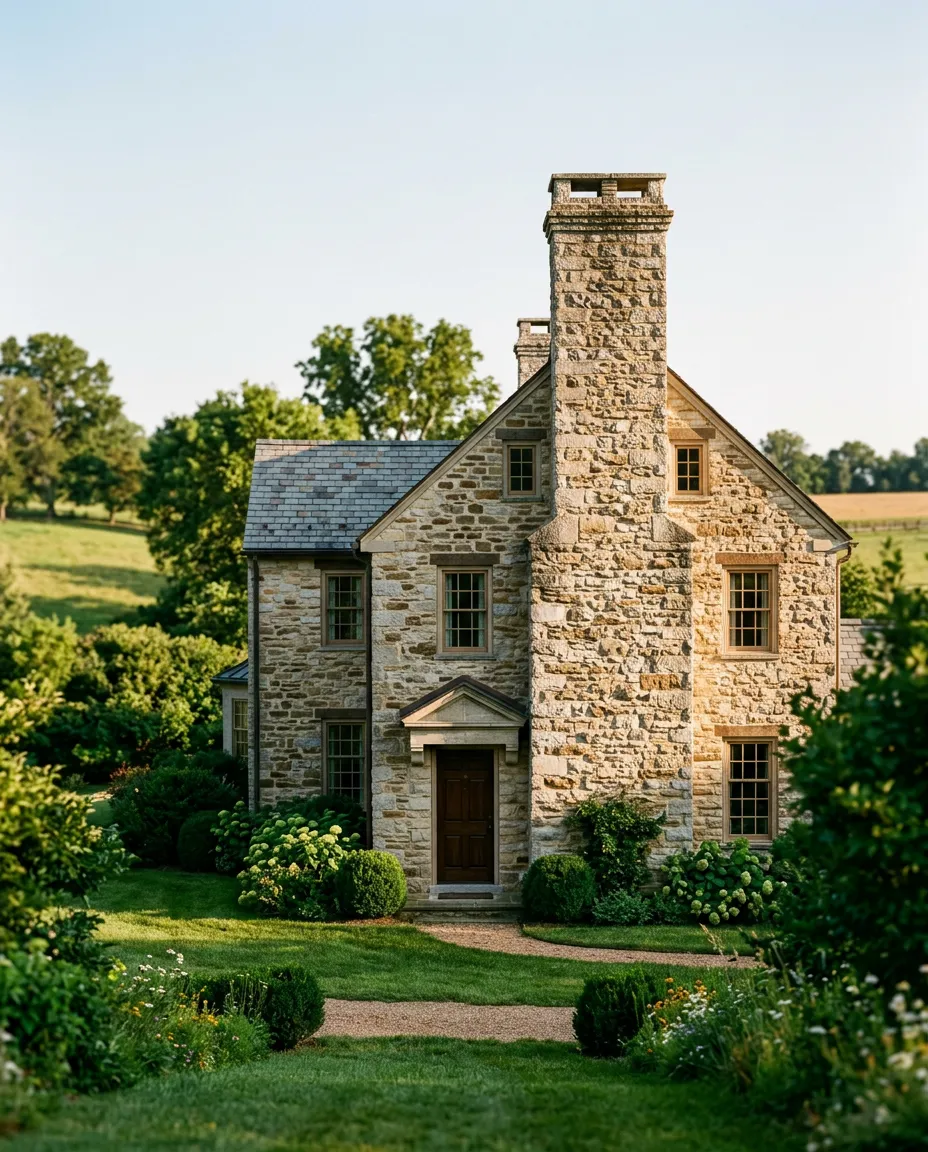
Central Kentucky's distinct microclimates subject exterior stonework to severe, recurring thermal shocks. Along the Shelbyville and La Grange corridor through Fayette County, chimney structures endure fifty or more rapid freeze-thaw cycles between November and March. When winter precipitation penetrates unsealed mortar joints, nocturnal freezing exerts immense internal pressure, accelerating spalling and fracturing historic stone blocks from within.
Standard modern contractors frequently misapply rigid Portland cements on regional limestone, creating an impermeable barrier that traps moisture and irrevocably damages soft historic brick. Our artisans formulate bespoke, vapor-permeable lime mortars tailored to the geological demands of Central Kentucky, allowing your estate's masonry to breathe, flex with seasonal humidity, and endure for another century.
- Shelbyville & La Grange Corridor: Engineered against heavy wind-driven rain and moisture migration
- Fayette County Historic Districts: Native limestone chemistry and vapor-permeable mortar matching
- Thermal Defense Architecture: Custom chimney crowns designed specifically for Bluegrass freeze-thaw cycles
SERVICE CLARIFICATION & SCOPE
Repair vs.
Sweeping
Understanding the vital difference between routine flue maintenance and permanent structural stonework protects your historic Kentucky home from foundational degradation.
ANNUAL HYGIENE & MAINTENANCE
Chimney Sweep & Inspection
Routine sweeping focuses on clearing flammable creosote, soot deposits, and blockages inside the internal flue chamber. While essential for seasonal fire safety, a sweep does not address stone decay or structural shifts.
- Flue cleaning and mechanical creosote clearing
- Visual camera inspection of flue liner tiles
- Draft testing and damper operation checks
- Removal of animal nests and loose soot buildup
- Superficial reporting of visible exterior damage
Limitation: Cleaning brushes and cameras cannot bond loose stone, replace disintegrated lime mortar, or stop water from penetrating masonry.
PERMANENT STRUCTURAL RESTORATION
Structural Masonry Repair
Structural masonry repair executes engineered reconstruction, historic lime tuckpointing, and stone replacement. It eliminates water intrusion, prevents chimney lean, and ensures lifetime architectural integrity.
- Complete teardown and heritage stone rebuilding
- Deep-joint raking and breathable lime tuckpointing
- Reinforced concrete crown and drip edge reconstruction
- Spalled brick and degraded fieldstone replacement
- Custom lead step-and-counter flashing installation
Master Mason Guarantee: We engineer structural repairs to withstand Kentucky freeze-thaw cycles for generations, preserving property value and safety.
Serving Lexington, Fayette County & the Bluegrass Region • Licensed Master Masons
SPECIFICATIONS & PROTOCOLS
Technical
Answers
Clear engineering guidelines on curing timelines, winter weather thresholds, and structural safety standards for Bluegrass residential masonry.
How long does a full chimney repointing or rebuild typically take?
Targeted repointing and mortar joint restoration generally conclude in 1 to 2 business days. Full teardowns and limestone rebuilds above the roofline require 3 to 5 days, incorporating staged mortar hydration intervals to guarantee structural load bearing.
Can masonry repair and crown pouring proceed during cold Bluegrass winters?
Masonry work requires ambient temperatures of 40°F and rising for standard curing. During winter, we deploy heated insulated enclosures and temperature-controlled curing blankets so repairs cure safely without freeze-thaw crystallization.
How do you distinguish superficial mortar erosion from internal structural failure?
Surface spalling involves loose joint dust under 1/2 inch deep. Structural failure presents through stack deflection, vertical shear cracks across multiple courses, detached flue tiles, or water damage on attic framing surrounding the stack.
Do you match regional Kentucky limestone and historic lime-based mortar formulas?
Yes. Historic Bluegrass homes utilize softer lime mortars and native limestone. Applying modern rigid Portland cement causes historic stone to fracture. We custom-blend breathable lime mixes and source regional limestone to ensure chemical and aesthetic harmony.
Will scaffold staging damage my standing-seam metal or asphalt shingle roof?
Never. We construct non-penetrating roof-staging platforms utilizing padded load-dispersion ridges. Counter-flashing and step-flashing integrations are fully inspected and resealed as part of the chimney masonry envelope.
How long must we wait before lighting a fire after crown repair or tuckpointing?
Refractory firebox repairs require 48 to 72 hours of ambient cure. Full chimney crown pours and exterior tuckpointing require a full 7-day chemical hydration window before enduring thermal cycling or high flue exhaust temperatures.
Are municipal permits required for chimney rebuilds in Fayette and surrounding counties?
Repointing is classified as maintenance, while partial or complete structural teardowns rebuilding structural brick or stone require municipal permits. We manage all filing, code compliance, and inspection verifications directly with local building officials.
How frequently should chimney masonry and crowns be inspected in Central Kentucky?
Because of Lexington's intense freeze-thaw cycles, chimney masonry and crown caps should undergo certified visual inspections annually, ideally in late summer before heating season demands begin.
IMMEDIATE MASONRY INTERVENTION
Stop Water Damage Before It
Spreads
Unchecked moisture degrades structural mortar joints, cracks flue liners, and incurs thousands in interior decay. Speak directly with our master masonry specialists today for priority Lexington dispatch.
Direct Master Mason Dispatch • Comprehensive 21-Point Inspection • Licensed & Fully Insured
Lexington, Kentucky
Monday–Friday: 7 AM–6 PM
Saturday & Sunday: Closed


Explore Bluegrass Stone & Masonry